

I Was in Hell While Living a Fairytale
For one person, telling the truth is liberating. For the other, it breaks their sense of self.

My husband sat at the head of the dining table, the wood creaking in our chairs, in the antique leafed table, in the floorboards. An old house is always speaking to you if you listen, and in return, it soaks up all the conversations it holds. He poured wine into the depression-era-colored glasses that had been left behind by the previous homeowners.
I leaned back, observing how the wine poured like honey, and how his face glowed warm orange from the light mix between the chandelier and the candles flickering on the table. One of our three black-and-white kittens, Charlie Chaplin, jumped up, my husband not bothering to shoo him away as he set the bottle down between us.
Charlie tiptoed across the Naval and Mameluke swords we keep crossed between the candlesticks as a reminder that before all this, we were entirely different people. He leaned forward, dipping his nose to taste the wine, each of us pulling out our phones, laughing while we snapped dueling photos, documenting our greatest successes and failures in a single picture worth a thousand words.
We compared angles, and between a bottle of wine and a floral arrangement, I saw all the things we’ve survived together and separately, all the ways I’ve loved him while keeping myself just out of reach, holding on to some piece of myself I thought I could never heal.

He lifted his glass, apologizing instead of cheersing, that the expensive Vouvray we’d brought from France, something we’d been saving, had accidentally been opened at our last party. He’d chilled it not realizing someone might uncork it. The bubbles were flat now. The moment we’d been saving it for already passed without our permission.
I could see him bracing for my annoyance, his eyes darting back to the cat as he sipped.
“Where did we get this one?” I asked, barely noticing the few bubbles still present.
“Loire Valley.” A trip we’d taken, just he and I, when we believed that saving a bottle of wine could save our marriage.
It was our second time visiting France, our first time being as a family, my mother and stepfather helping us with our then two-year-old oldest who clung to me the entire trip. I was in my second trimester with my second daughter, her pregnancy easier than her sister’s, and I believed in the life I was building.
But somewhere between watching my daughter play on ancient ruins and riding carousels in town squares laughing with children who spoke other languages, between walking the Hameau de la Reine and somehow connecting with Marie Antoinette’s basic desire to pretend to live a simple life in a world of consumption, I felt a systemic void in my autonomy of self.
I had built the perfect queendom in my own right. A house in the suburbs, a husband who was devoted to me, parents that lived just far enough away to watch the baby overnight but not so close that they could break boundaries. I was a military pilot, with a guaranteed job in the airlines when I got out the following year. I had it all, but sitting with my hand on my stomach, looking out the window of a thirteenth century castle like a fairytale, I knew on the inside this wasn’t the story I wanted to write. Even as it was the very one that I always dreamed about.

And I didn’t write about it. Back then, I was so disconnected from myself and my craft, I didn’t write any of it down. Just took pictures so maybe one day I’d look back on it and see what I wasn’t saying back then. I was in hell, and I didn’t even know it. The revolution had been brewing from the beginning, and I was just waiting for the walls to burn down.
With my husband behind the lens, I certainly didn’t know how to say it. He took a beautiful photo of me, believing this would all have a happy ending. Thinking he had married a woman who had it all figured out, not knowing that she was just a child inside still crying for her mother.
France unlocked patterns for me. The art reminded me of how I used to draw the faces of women in all of my notebooks. The old bookstores reminded me of how I used to write poetry on napkins and document my life with an unfulfilled promise it would mean something one day. The surnames of original characters who’d never been known. The endless history I’d grown up obsessing over surprised me when I still remembered how all the heroines I once read about fell to their knees in the end.
On our flight home from that first trip, we were already planning our second one the next year. The new baby would be almost one, I’d be out of the service, but between class dates for the airline. But then the pandemic hit, the airlines canceled new hires indefinitely, and my reality came crashing down like Marie’s when her certain existence became a lesson to be learned.
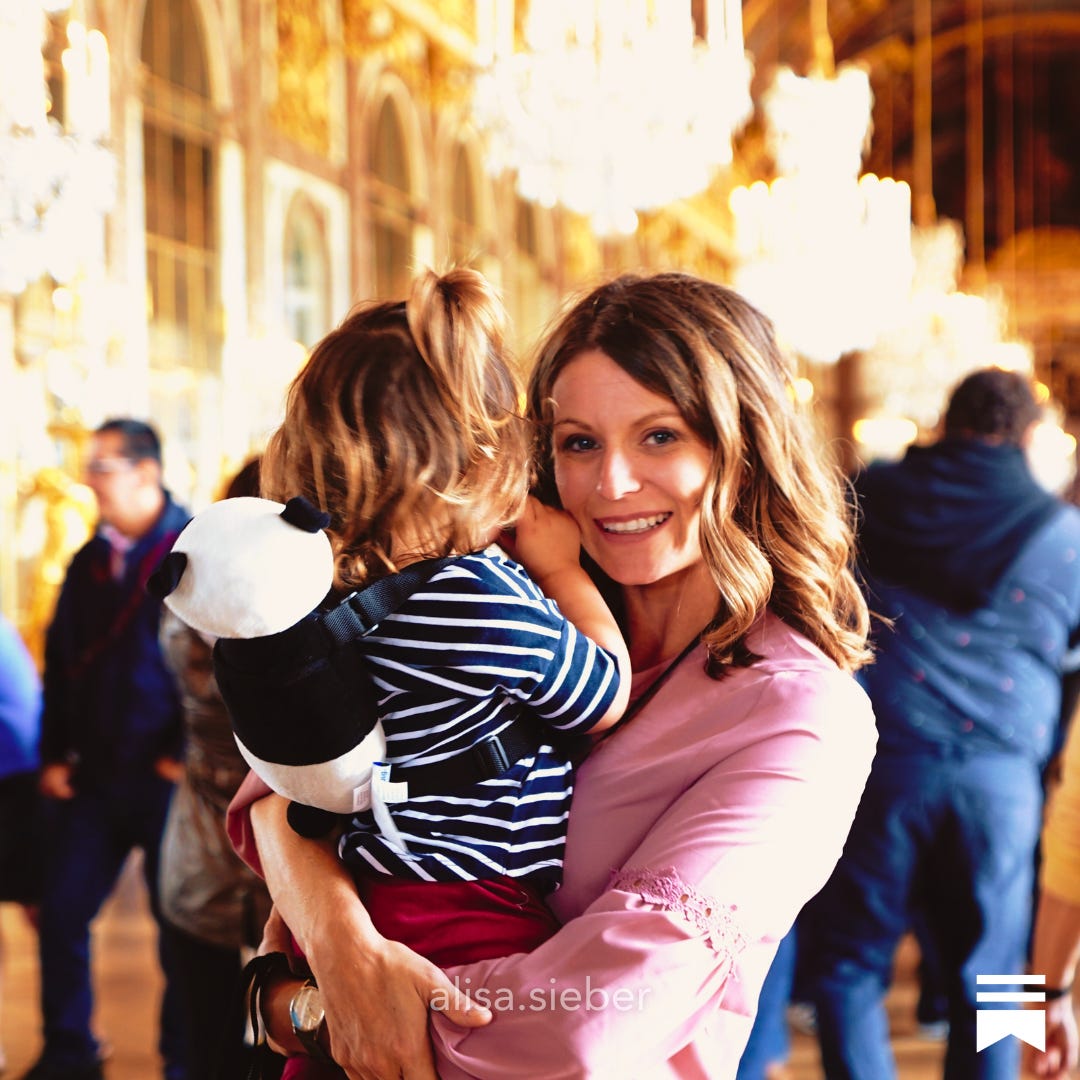
Our trip was postponed a year. But a lot can happen in a year.
By the time we were boarding Air France a second time, I wasn’t the same person. It was just my husband and I, in a renaissance of our own. We landed in Paris with intentions of pure escapism. I was still reeling with postpartum depression but acting like I wasn’t disconnecting every time I held my then two-year-old youngest.
I was biting my tongue every time my mother came into the kitchen, which was every day now because she lived with me after she almost lost everything, her life included. I was pretending to be happy with my husband, whose snores in the middle of the night made me retreat to the fantasy I actually wanted to live.
The one where I wasn’t in that life, and I was somewhere else entirely.
I wore a skin-tight low-cut black sequin dress, even though I’d never felt more out of touch with the weight of my body, while my husband was in the prime of his. I planned a night out with him to see a Crazy Horse Show, telling him we were seeing it to spice the romance between us, but in reality, I was setting the stage for the story to make sense. I’d been doing it for months, to cover up what I didn’t know yet how to explain.
We walked into a club where everyone wore a mask, and I felt the most seen I’d ever been. I drank the bartender’s choice, a cranberry and Hennessy, and dropped the performance. And I self-destructed.
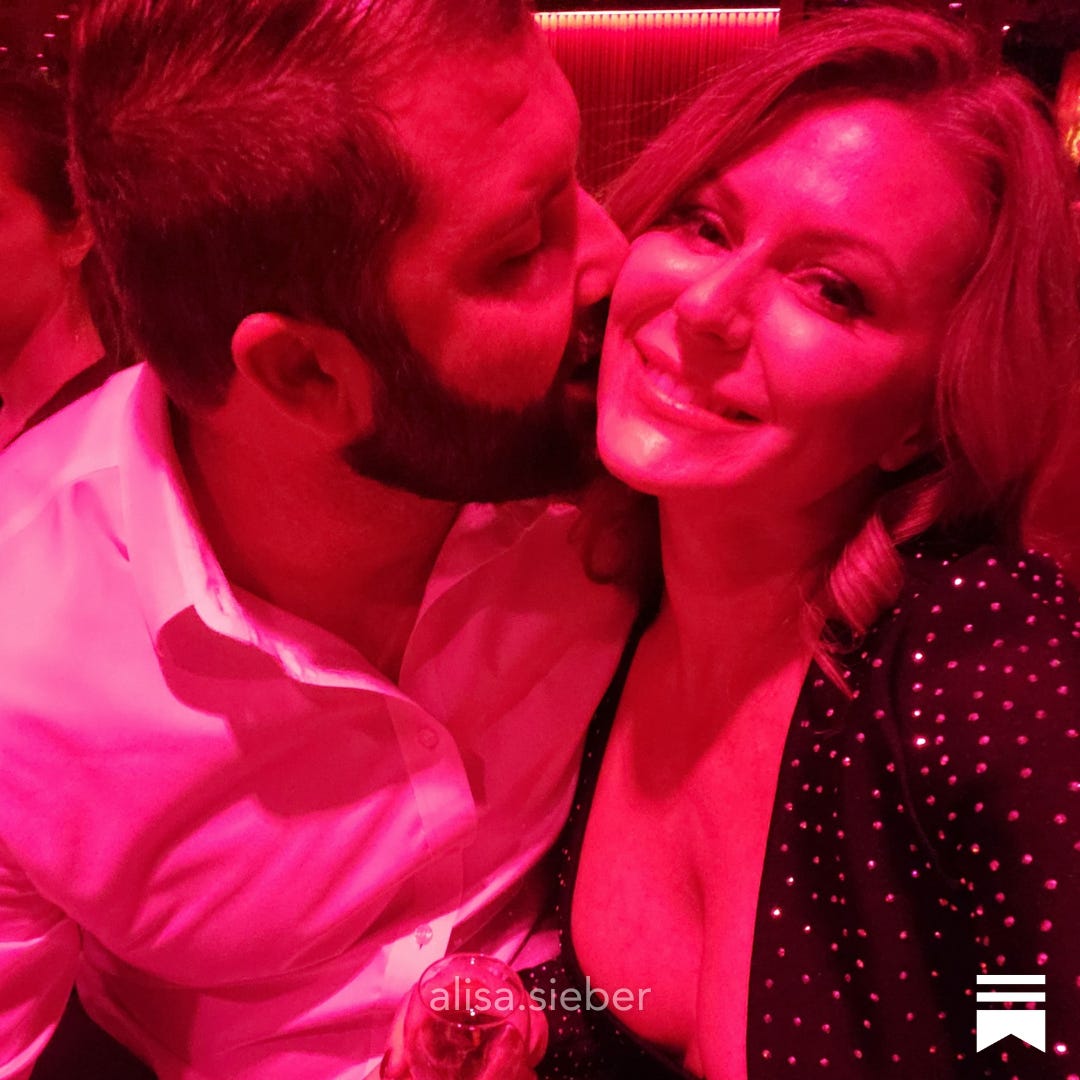
To my husband, it looked like an accident. A series of unfortunate events while we pretended like the realities of the responsibilities, the politics, the restrictions were all lifted.
Like the photos we each took: the same scene, but two different perspectives.
Our healing journey began when I started telling the truth, the absolute truth, and then having to hold him as his reality came crashing down. That’s the thing about telling the truth. For one person, it’s liberating. For the other, it can break their sense of self.
It could have been avoided, if only I’d been doing this from the beginning. If only I knew how to tell my story from the start. Maybe he would have understood. Maybe I would have done things differently. But I was just a kid when I met him, running from a heartbreak I didn’t know how to name.
Now this is where we’re at. Me, naming it. Making it make sense. That when we exist in a relationship keeping our internal world shut down, we have made ourselves captive by our own doing. That by not trusting those we claim to love or that love us to hold space for our wounds, we’re digging the knife deeper. That sometimes the parts of us that hurt others are responding from survival.
But sitting across from the man who has stood by my side through all of it, I wouldn’t change it for any alternative life where I am not here, with these words to tell, despite almost losing it all.

“We’ve come a long way since then,” I whispered, watching Charlie jump to the ground, his body landing with a hard thump.
He nodded, and I couldn’t think of a more perfect time to be drinking such a wine, in our own hamlet with a French name where we’re trying to break the script, where I’ve no desire to go anywhere but be here.
“I’m glad it was opened for us,” I told him. “Otherwise, we might have drunk something else and wouldn’t be sitting here drinking imperfect wine in this perfect moment.”
I could see in his face how my reaction felt like evidence of something shifting. “It’s serendipitous,” he said in reverence for the way my mind connects the dots.
Maybe it was the honesty I’d finally learned how to speak, or that I was writing this chapter in my head even as I was sitting there across from him, believing this moment was important enough to remember. That this could be the setup for the fairy tale I’ve always wanted to write.
But even as we cleared the dishes, even as we transitioned the evening from the conversation that happens around the dinner table to the dance that happens in intimate spaces, my body stiffened with the habitual curse of someone who still doesn’t know how to stay present with her eyes closed, who knows this story is far from over.
He reached for my hand. I took it.
But my body was already preparing to leave.
Read What Came Before
This chapter picks up the night we returned from the dome. The sound circle where I sang my confession. The walk back to our house, palm in palm, both of us knowing what came next.
None of it lands without understanding what happened in that circle.
The Intimacy Paradox

My husband and I stared at the spaceship-looking white dome that now stood in bright contrast against the hundred-year-old redwoods, the old and natural meeting the new and crafted co-existing. We’d finally done it.
About This Series
How the Fuck Did I Get Here? is a memoir-in-progress told through interconnected chapters. Each piece stands alone, but together they trace a journey from numbness to presence, from survival to integration, from choosing between two halves to learning to be whole.
This isn’t a story about healing being linear or easy. It’s about what happens when you finally stop running from yourself and ask the hard questions. When you sit with the uncomfortable answers. When you realize that breaking generational cycles means learning to hold both strength and softness at once.
This is the heroine’s journey told in real time: the messy middle, the ongoing practice, the moment-by-moment choice to stay present even when everything in you wants to run.
How to Read This Series
This is a choose-your-own-adventure memoir. Throughout each chapter, you’ll see key words and phrases underlined as hyperlinks. Click them to discover other stories exploring the same themes. Or browse the tags below to find what calls to you.
This interconnected web lets you:
Follow specific themes across the series
Discover related chapters organically
Navigate by what resonates with you
See patterns and connections emerge
Start anywhere. Follow the threads that call to you. Each chapter stands alone, but together they reveal the larger story.
Explore By Theme
This chapter touches:
The Journey
Disillusionment · Reclaiming Passion · Survival Instinct · What It Cost
→ the unraveling, the reckoning, and the long road toward awareness.
The Relationships
The Husband · Marital Growth · Motherhood Wound · Avoidant Attachment · Trust · Intimacy · Fear of Exposure · Worthy of Love
→ attachment, vulnerability, and learning to stay instead of perform.
The Places
France · Chez Serendip · The College Years
→ the landscapes that mirror inner transformation.
The Work
Writing Process · Journaling · Sharing Perspective · Art · Poetry
→ creation as catharsis, storytelling as self-repair.
The Struggles
Self-Abandonment · People Pleasing · Masks · Body Dysmorphia · Substance Abuse · Self-Destruction · Dissociation · Escapism · Attention-Seeking · Motherhood Wound · Body Keeps the Score
→ the coping, the collapse, and the ways the body keeps score.
The Context
American Dream · Military Service · Pregnancy · Postpartum Depression · The Feminine · Sexuality · The Fantasy · The Lies · The Wounds · The Origin Story · The Five Years
→ the systems, myths, and histories that formed the backdrop of becoming.
Click any theme to explore related stories.
About the Author
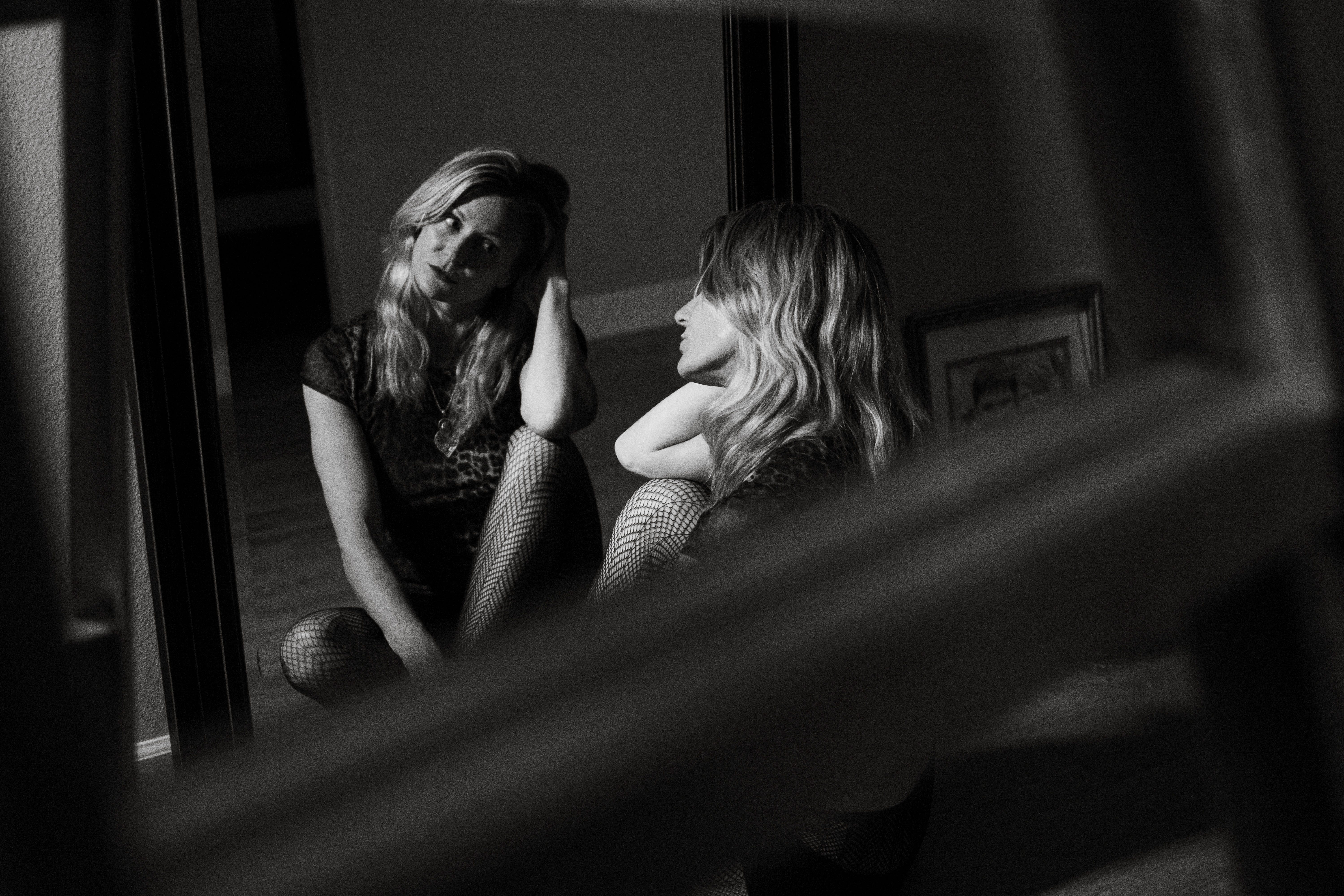
Alisa Sieber is a writer, former Marine Corps pilot, and mother exploring the intersections of healing, motherhood, and breaking generational cycles. Through raw, embodied storytelling, she examines what it takes to move from armor to integration, from choosing between strength and softness to learning to embody both.
She writes openly about complex trauma, postpartum depression, military identity, and the ongoing practice of staying present. Her therapy is her writing: public, accountable, and in real time.
She lives on a small farm in Northern California with her husband, two daughters, and too many animals. She’s building Chez Serendip, a cultural sanctuary and intentional community space centered on movement, creativity, and transformation.
Share How the Fuck Did I Get Here?
How the Fuck Did I Get Here? is a personal essay series exploring generational trauma, healing, and self-transformation. Through raw storytelling and deep introspection, it unearths the past to understand the present: reckoning with the cycles we inherit and the courage it takes to integrate what the world tells us to split.
If this piece resonated with you, share it with someone who needs to know they’re not alone.
Subscribe to How the Fuck Did I Get Here?
New chapters published weekly. Subscribe to follow this journey of breaking cycles, staying present, and learning what integration actually means: not perfection, but practice.
Free subscribers get:
Select chapters from the archives
Access to select new chapters for 2 weeks
Newsletter in your inbox
Comment access
Paid subscribers get:
Full archives
Access to all new chapters
Unlimited commenting to process alongside others
Gift subscriptions to share with people who need to see if this resonates
My gratitude for supporting this work
Connect with Alisa
Instagram: @alisa.sieber
Youtube: @alisa.sieber
Join the Conversation
Real talk: This shit is hard.
Breaking cycles. Staying present when it’s unbearable. Learning to hold anger and love simultaneously. Some days it works. Some days it doesn’t. Most days, somewhere in between.
If you’re doing this work too (asking the uncomfortable questions, sitting with what doesn’t resolve, practicing integration even when every instinct says run), join the subscriber chat. That’s where we process between posts, share what we’re learning, and stay present together.

And leave a comment below. Not to perform insight or prove you’ve healed. Just to be witnessed. To witness others. To let the messy middle be exactly what it is.
Healing isn’t linear. Let’s stop pretending it is.
You’re not alone in this. Your presence here reminds me I’m not either.