

Christmas. A Love Hate Relationship. Part 1.
Christmas Past — The Girl in the Subaru

I was eight, maybe nine when I decided I hated Christmas. I was in the front seat of my mother’s Subaru in the parking lot behind her hair salon in Willow Glen. The seats reeked with the smell of her boyfriend’s cigarettes and his body odor. We were fighting about something insignificant now, but critical at the time. A battle between a disillusioned single mother and a daughter recognizing her world wasn’t like that of her friends, especially during the holidays. I never saw much of my mom during that time of year; her clients getting priority over her time. We jabbed at each other in ways an adult should have known better and a child shouldn’t have known at all.
I was holding still, staring at the dashboard, trying not to cry.
Then she turned to me, exasperated, and said, “Santa isn’t even real.”
It might as well have been a slap.
Raised Jehovah’s Witness, she never believed in him, or even comprehended the magic behind the fantasy. She said it like it meant nothing, just a fact meant to make me appreciate her more. So that neither a man in a red suit nor an ex-husband who bought me Holiday Barbies I couldn’t open because they might be valuable someday, they weren’t, could take credit for her hard work. But this crushed something I didn’t know was still intact. My maternal grandmother had already ensured I knew that to believe in Santa meant I wouldn’t be resurrected. What hurt was the confirmation that I couldn’t trust adults to protect my innocence. What was the harm in belief in someone who delivered on wishes and promises? I was being forced to grow up too early, again, without anyone asking if I was ready.
The tears fell. She got out of the vehicle.
Looking back at that moment, it makes all the other holidays that followed make sense.
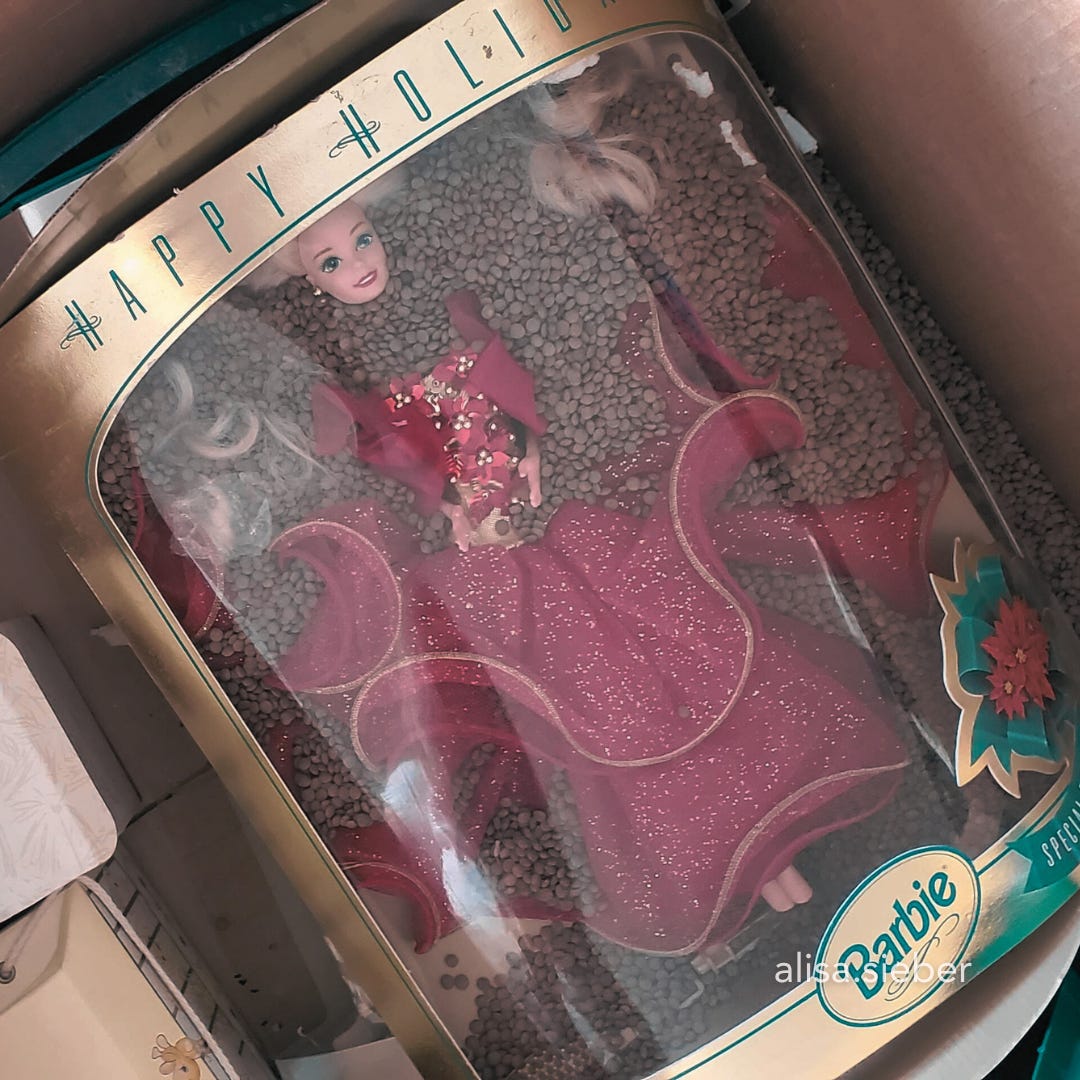
I’ll tell you, I hate Christmas because I hate the idea of cutting down a tree, or watching some plastic Douglas Fir get shoved into a landfill when a single bulb goes out, stripped of any memory of who placed the star on top of it in the first place. I hate watching wrapping paper crumpled into black trash bags after we tear through boxes to get to the thing inside, without ever noticing who’s sitting on the outside, because even our rituals have become disposable. I hate the forced cheeriness required to keep the peace, the ridiculous red hat that never changes, year after year, worn like parody of something important.
I hate the religious undertones that sit in such stark contradiction to the abundance and overeating, the buying of happiness, the collective blind eye turned toward how much of how we celebrate as Americans collides directly with the seven deadly sins. We’ve been addicted to consumerism for so long we don’t even recognize it as an addiction anymore. I hate the hypocrisy of the whitewashed child in the manger, and the way I never learned how to articulate that discomfort while passing plates of brown sugar baked ham.
And I hate how some old white man is meant to invade my house and take credit for things I worked hard for, the quiet lesson baked into the story that labor belongs to women but praise belongs to someone else, and the suffocating pressure to do things differently while somehow staying exactly the same.
And yet, I became a mother. And mothers don’t get to hate Christmas out loud.
I’ve grown into an adult who underplays Christmas but still tries to make it feel magical, because I want my children to grow up with only the best parts of what I had, without having to feel the worst.
I want them to remember how their grandfather still painstakingly decorates his yard every year, turning it into an art installation that draws neighbors from blocks away. I want them to feel special every year when they pull out an ornament of their tiny handprint in clay, amazed at how much bigger they’ve grown. I want them to be thoughtful about others in their family, and really think about how to speak to someone in their love language. I want them to have something to look forward to, because life isn’t always kind, especially to children.
But I don’t want them to grow up missing the point.
So I’ve tried to build something different. Something that holds the magic without the wounds.
I started sharing the history behind Christmas when we were homeschooling our girls, creating excitement around the solstice. I let them know I despise Christmas music (except for any song they sing) for its repetition and often narrow takes on the holiday, but then suggest we find indie remixes or learn carols in different languages on the piano. I’ll share with them the nostalgia of peeking inside presents with scissors and retaping them shut with my cousins, without explaining how morals and politics got in the way of those gatherings. I’ll lift them to the top of the tree to put the star on like my father used to do to me, and remind them that some ceremonies are sacred.
I show up to my husband’s holiday party at his new job, despite my own exhaustion, with the kids for a sugar-filled night I won’t regret because they got to see me cry watching Elf for the first time. And I talk to them about how we can create our own traditions not rooted in consumption, and wherever we are for Christmas, we visit an antique shop where everyone picks out something for themselves and something for someone else in the family.
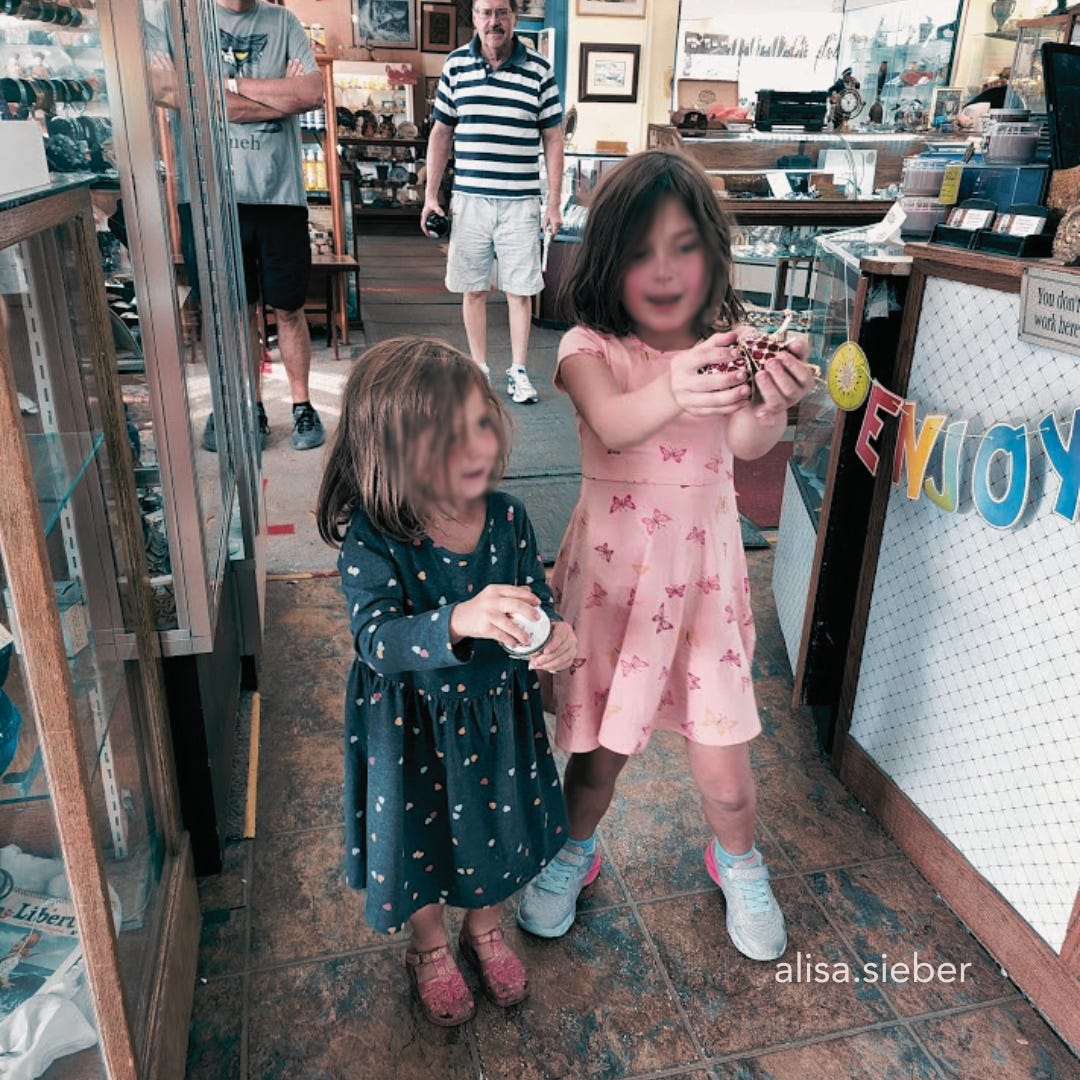
And when they ask, “Mommy, why don’t you like Christmas music?” when Baby It’s Cold Outside starts playing as we stroll down the grocery store aisles, I don’t let them see how I shiver at how consent is always blurred between lyrics. Or how my nose twitches at the sight of cases of Bud Light, picturing empty blue cans hanging as ornaments in a house where it wasn’t the kids that were out of control. I avoid the dolls in red and green ball gowns in the toy section because getting into my car after checkout, I feel like I’m still that girl in the Subaru trying to make sense of why her mother hated hearing about how Christmas was with her father.
I don’t tell them that when I see the mistletoe overhead, I’m suddenly stiff to touch, avoidant of committing to anything that might hurt me. I don’t tell them that I’ve hated Christmas since I was their age. All those versions of me are still here, taking up residence in my nervous system every December, reminding me of all the things I wished for, knowing I would be the only one responsible for making them come true.
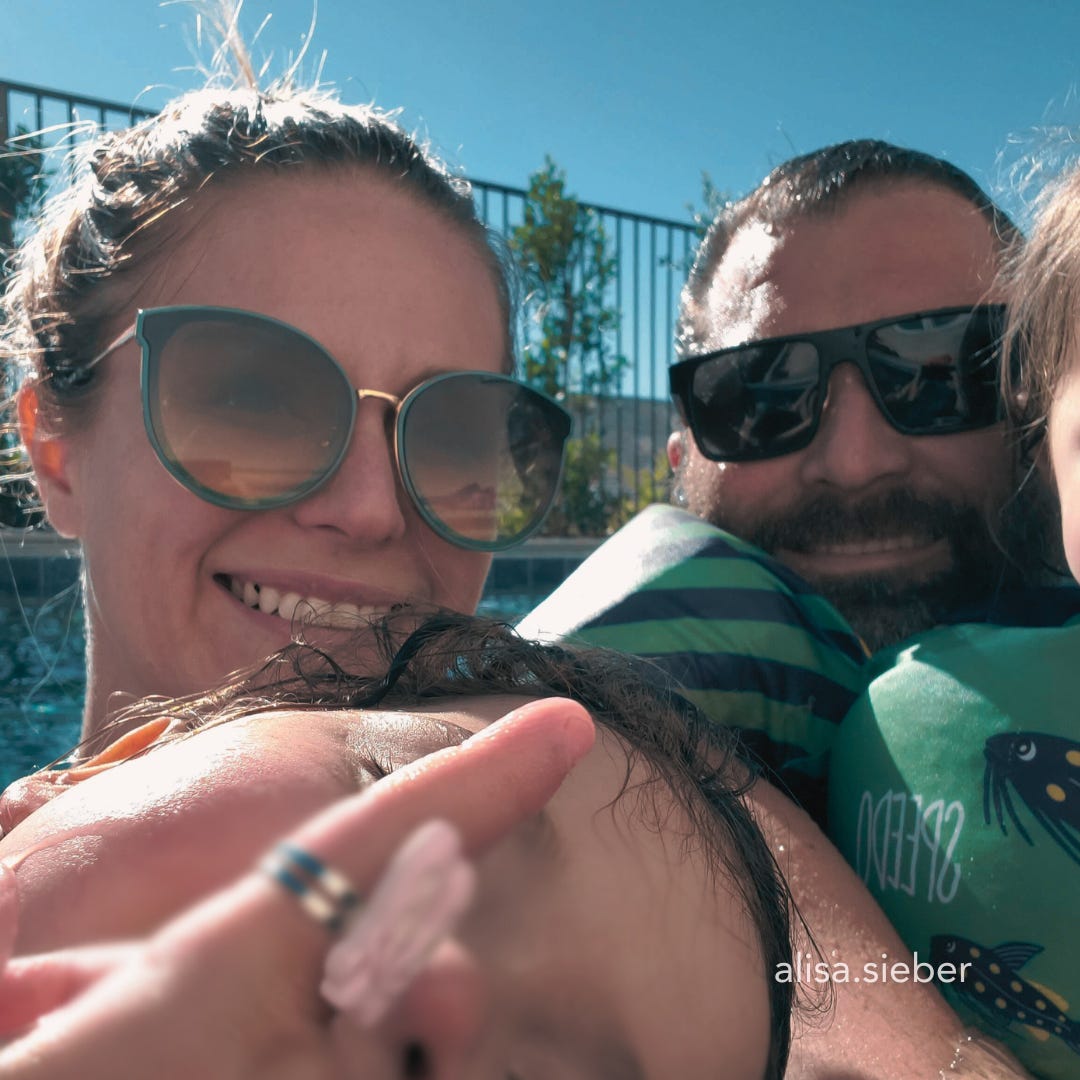
So instead I just let them know, “Mommy didn’t always have great Christmases growing up,” and I remind them to give extra appreciation when my mother knits them a new dress or me a shawl as a gift, because I know how hard she worked on rectifying a past she’s still learning to forgive, even though I already have forgiven her.
I’ve turned Christmas into something slow and intentional. And like all other areas of my life that now hold hard-earned peace, I defend it. My nervous system only recently learned to recognize safety, especially around the holidays, and even more so around family.

But it wasn’t always this way.
For years, I mailed Christmas cards that looked like they belonged in a Hallmark movie. Golden hour photos, matching outfits, everyone smiling. I hired expensive photographers to take us to fields and Photoshop out the strain, the anger, the exhaustion that came with trying to capture something that felt increasingly out of reach.
Behind the photo was a different story.
A woman learning how to perform magic without believing in it. A life built on evidence instead of trust. A decade of Christmases spent holding it together just long enough to smile for the camera, convinced that if I could make it look real, it might eventually become real.
It didn’t.
That comes next.
Continue the Story
I thought if I could keep Christmas looking right, it would eventually feel right. That performance could stand in for safety.
What I learned over the next decade: appearances buy time. They don’t buy peace.
Christmas. A Love Hate Relationship.

I have a box of Christmas cards somewhere that I’d order on Shutterfly during Black Friday every year. Golden hour fields, matching outfits, smiles that took forty-five minutes and three meltdowns to capture. I was never allowed to believe in Santa Claus (read why in
About This Series
How the Fuck Did I Get Here? is a memoir-in-progress told through interconnected chapters. Each piece stands alone, but together they trace a journey from numbness to presence, from survival to integration, from choosing between two halves to learning to be whole.
This isn’t a story about healing being linear or easy. It’s about what happens when you finally stop running from yourself and ask the hard questions. When you sit with the uncomfortable answers. When you realize that breaking generational cycles means learning to hold both strength and softness at once.
This is the heroine’s journey told in real time: the messy middle, the ongoing practice, the moment-by-moment choice to stay present even when everything in you wants to run.
How to Read This Series
This is a choose-your-own-adventure memoir. Throughout each chapter, you’ll see key words and phrases underlined as hyperlinks. Click them to discover other stories exploring the same themes. Or browse the tags below to find what calls to you.
This interconnected web lets you:
Follow specific themes across the series
Discover related chapters organically
Navigate by what resonates with you
See patterns and connections emerge
Start anywhere. Follow the threads that call to you. Each chapter stands alone, but together they reveal the larger story.
Explore By Theme
This chapter touches:
The Origin
Christmas | The Origin Story | The Fantasy | Disillusionment
The Inheritance
Generational Trauma | Religious Trauma | Motherhood Wound
The Nervous System
Body Keeps the Score | Identifying Triggers | Survival Instinct | Performing for Safety
The Choice
Motherhood | Trust | Foundational Safety | Breaking Cycles
The Integration
Inner Child Healing | Presence | Integration
Click any theme to explore related stories.
About the Author
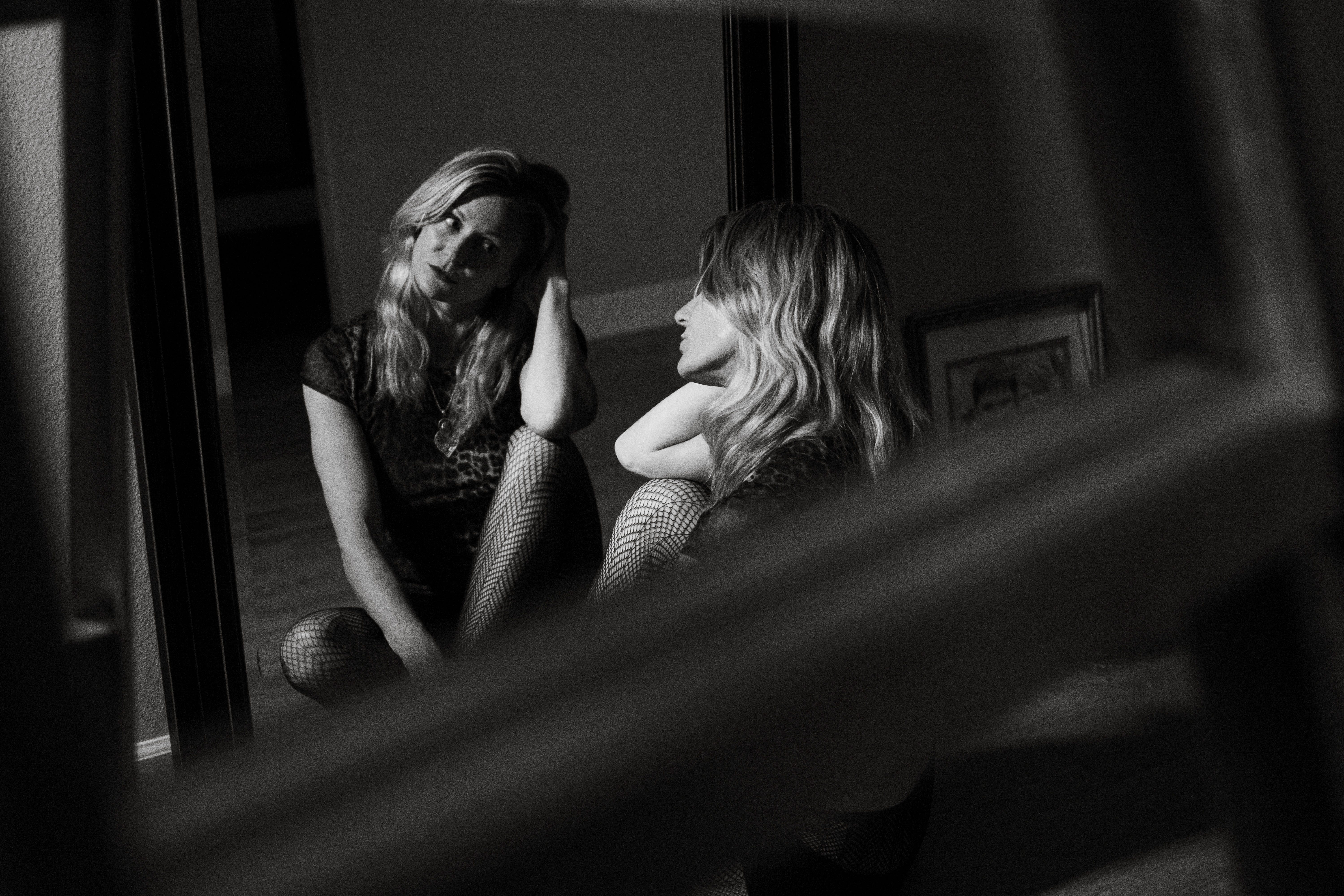
Alisa Sieber is a writer, former Marine Corps pilot, and mother exploring the intersections of healing, motherhood, and breaking generational cycles. Through raw, embodied storytelling, she examines what it takes to move from armor to integration, from choosing between strength and softness to learning to embody both.
She writes openly about complex trauma, postpartum depression, military identity, and the ongoing practice of staying present. Her therapy is her writing: public, accountable, and in real time.
She lives on a small farm in Northern California with her husband, two daughters, and too many animals. She’s building Chez Serendip, a cultural sanctuary and intentional community space centered on movement, creativity, and transformation.
Share How the Fuck Did I Get Here?
How the Fuck Did I Get Here? is a personal essay series exploring generational trauma, healing, and self-transformation. Through raw storytelling and deep introspection, it unearths the past to understand the present: reckoning with the cycles we inherit and the courage it takes to integrate what the world tells us to split.
If this piece resonated with you, share it with someone who needs to know they’re not alone.
Subscribe to How the Fuck Did I Get Here?
New chapters published weekly. Subscribe to follow this journey of breaking cycles, staying present, and learning what integration actually means: not perfection, but practice.
Free subscribers get:
Select chapters from the archives
Access to select new chapters for 2 weeks
Newsletter in your inbox
Comment access
Paid subscribers get:
Full archives
Access to all new chapters
Unlimited commenting to process alongside others
Gift subscriptions to share with people who need to see if this resonates
My gratitude for supporting this work
Connect with Alisa
Instagram: @alisa.sieber
Youtube: @alisa.sieber
Join the Conversation
Real talk: This shit is hard.
Breaking cycles. Staying present when it’s unbearable. Learning to hold anger and love simultaneously. Some days it works. Some days it doesn’t. Most days, somewhere in between.
If you’re doing this work too (asking the uncomfortable questions, sitting with what doesn’t resolve, practicing integration even when every instinct says run), join the subscriber chat. That’s where we process between posts, share what we’re learning, and stay present together.

And leave a comment below. Not to perform insight or prove you’ve healed. Just to be witnessed. To witness others. To let the messy middle be exactly what it is.
Healing isn’t linear. Let’s stop pretending it is.
You’re not alone in this. Your presence here reminds me I’m not either.