

Christmas. A Love Hate Relationship. Part 2.
Christmas Present — A Decade of Pretending

I have a box of Christmas cards somewhere that I’d order on Shutterfly during Black Friday every year. Golden hour fields, matching outfits, smiles that took forty-five minutes and three meltdowns to capture. I was never allowed to believe in Santa Claus (read why in Part 1 first: Christmas Past — The Girl in the Subaru), so I tried to create evidence that Christmas magic existed anyway. If you received one, you probably thought we had it together.
We didn’t.
No one who received those cards would have known how much I was struggling behind the glittered envelope. That was the point. I was building evidence of a life I wanted to believe in, mailing it to everyone I’d ever met, hoping that if enough people saw it, it might become true.
I remember my first Christmas with my now husband in 2006. We had both left the Bay Area at eighteen, moving to San Diego for the military, where we met in college. He had broken up with me after a short stint of casually dating because he was leaving for flight school. I went home with a conflicted broken heart, still trying to convince myself that I was making the right decision by leaving, but being too afraid to stay long enough to figure it out.
By the end of freshman year in 2007, we were back together, despite the entire United States between us. That Christmas, our first as a real couple, we reunited at his family home, where I opened my first Christmas gift from him, an XBOX 360 Halo Edition. I assumed it was really for him, a gift that would eventually return to its owner, but he said he knew I loved video games. It was permission to disappear into something familiar, something controllable, a way to occupy the space his absence left behind.
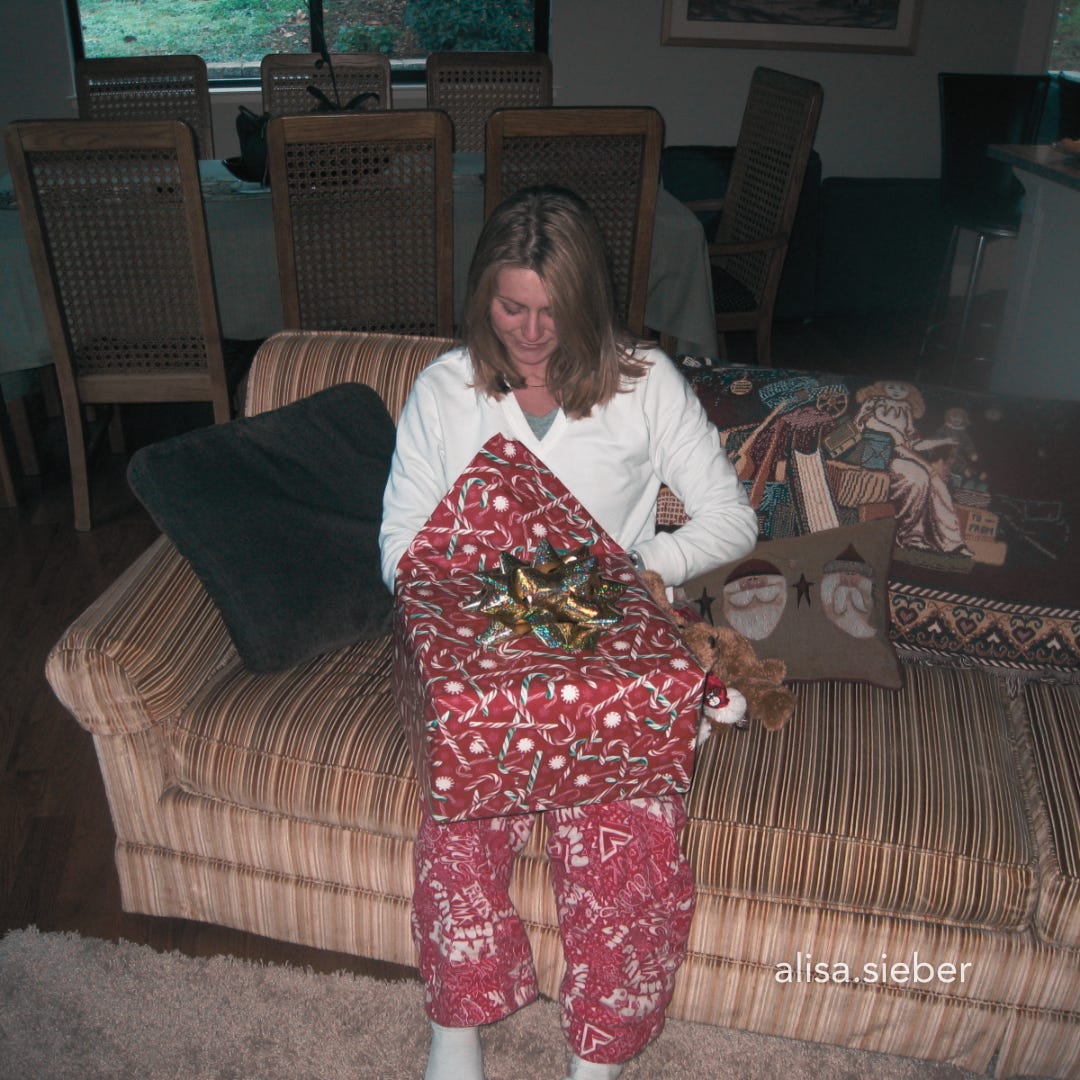
By 2008, my husband and I were publicly engaged but secretly already married. Engaged at twenty. Married before we had a place to host Christmas or any idea how to build traditions of our own. In hindsight, I wouldn’t recommend it. But every year, we’d pack up, if the military permitted us, and head home, driving the coast or flying a Cessna ourselves to relive childhood memories with family that didn’t always recognize the people we were becoming. We were still orbiting the nucleus of our families, not yet landing in our own patterns.
I commissioned as an officer just before Christmas in 2010, and would soon move out of state just as my husband came back, putting us geographically separated for seven of our first ten years together. There was agony in those years, a constant difficulty concentrating while I was becoming a Marine, learning to fly aircraft, trying to stay present in a relationship that mostly existed across distance and time zones. Christmas became the one holiday we could count on, the only moment each year where our lives briefly overlapped, where we pretended proximity was enough, until we were finally colocated again by 2014.
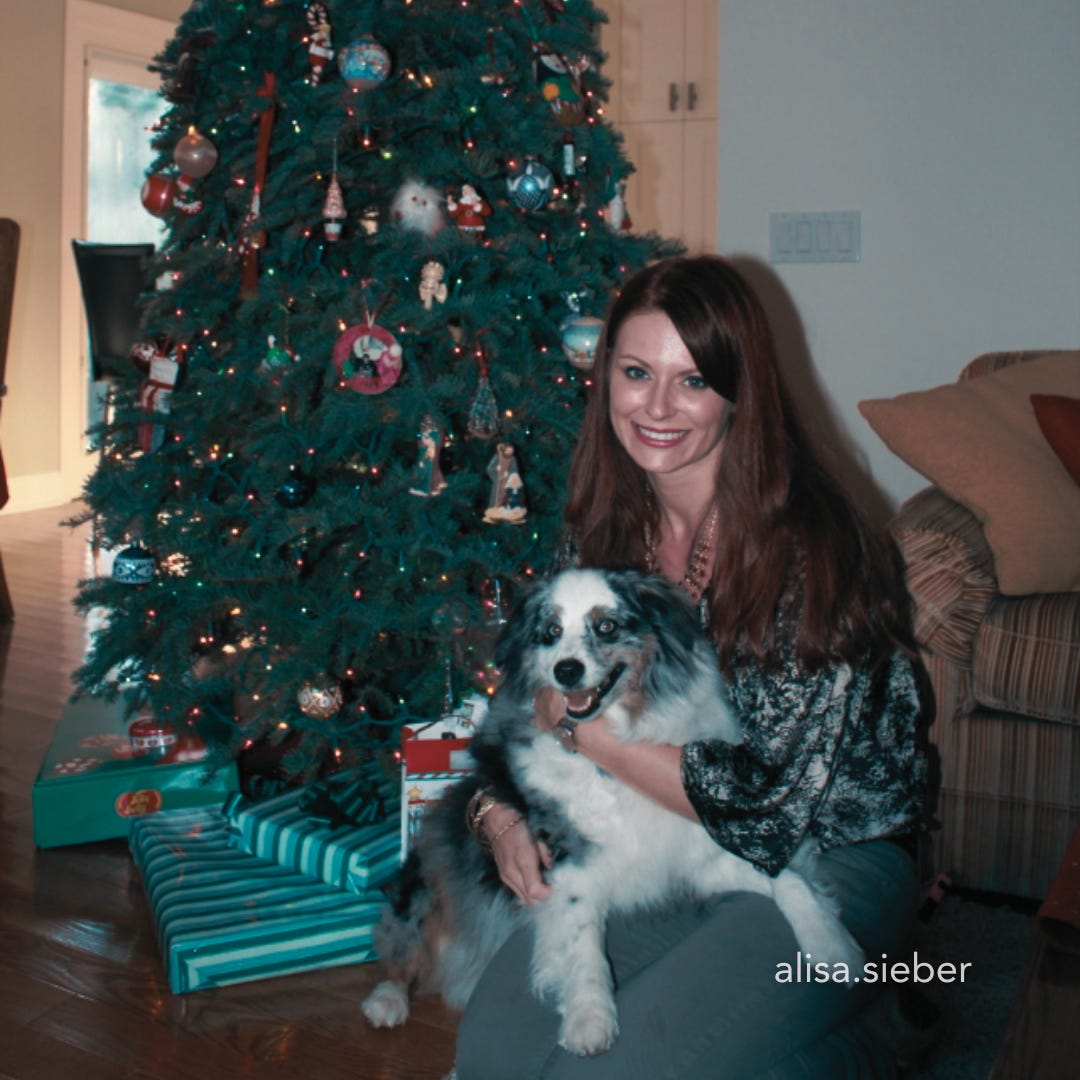
When our first daughter was born in 2016, time stopped making sense in the way it used to. I returned to work after sixteen weeks of maternity leave, my body still not mine, my mind split, trying to remember how to exist in a world that expected me to pick up exactly where I’d left off. I started leaving during my lunch breaks to breastfeed her, rushing back to my unit with my shirt wrinkled and my focus fractured, carrying her tiny green footprints stamped onto a Christmas ornament from daycare in my bag like proof that something important was happening somewhere else.
My unit grew visibly annoyed that I was gone so often, treating me, somehow at the same time, like I was indispensable simply because I wasn’t there and sidelined because they didn’t actually want to fly me. And then suddenly it was Christmas, and I couldn’t figure out where all the time had gone, only that I felt like I was failing at everything at once.
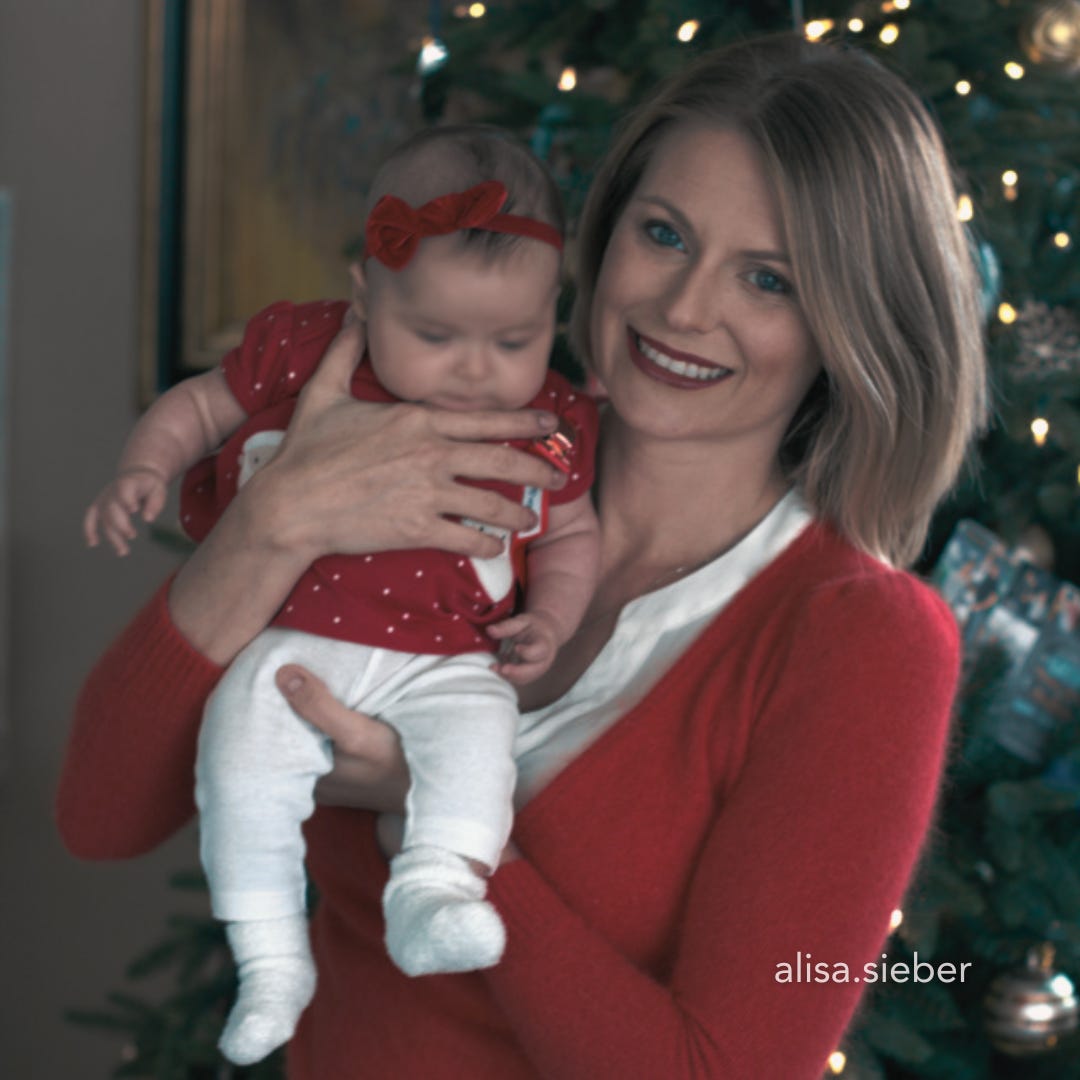
By 2017, my daughter had turned one, the holidays rolled around again, and I have no memories of the Christmas we spent together with my mom at her place. I was struggling in my career, failing and trying again, feeling repressed and overstrained. I was preparing for a flight that would take me around the world in twenty-eight days, separating me from my year-old daughter, one that would determine if I would become an aircraft commander or not. My capacity was split between avoiding triggering my mother over dinner, assuring my husband he could do this without me, and hoping that I wouldn't fail the one thing I'd spent my entire military career preparing for.
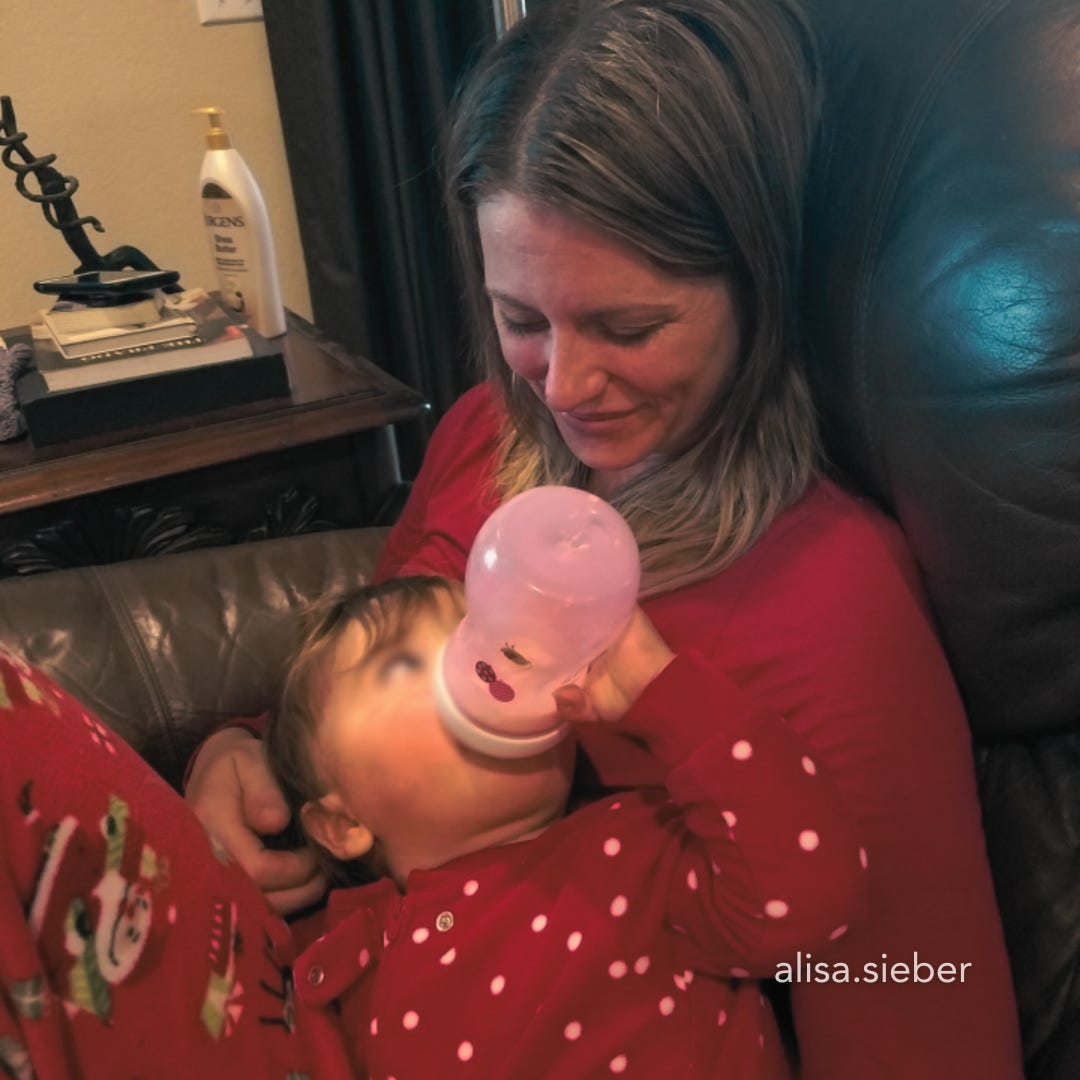
I passed the evaluation and became an aircraft commander, a story in itself. But I was disillusioned by the trials and tribulations of getting there. I wanted to lean further into motherhood, and ended up with another planned pregnancy. My youngest was supposed to be due in January, five days after my birthday, which would have felt serendipitous to me. But instead, on Christmas 2018, I was postpartum after being discharged from the NICU, leaking and learning my mother had a brain tumor. She hadn't wanted to burden me, but it was serious. Everything seemed to loom in the balance, I felt like control was slipping away.
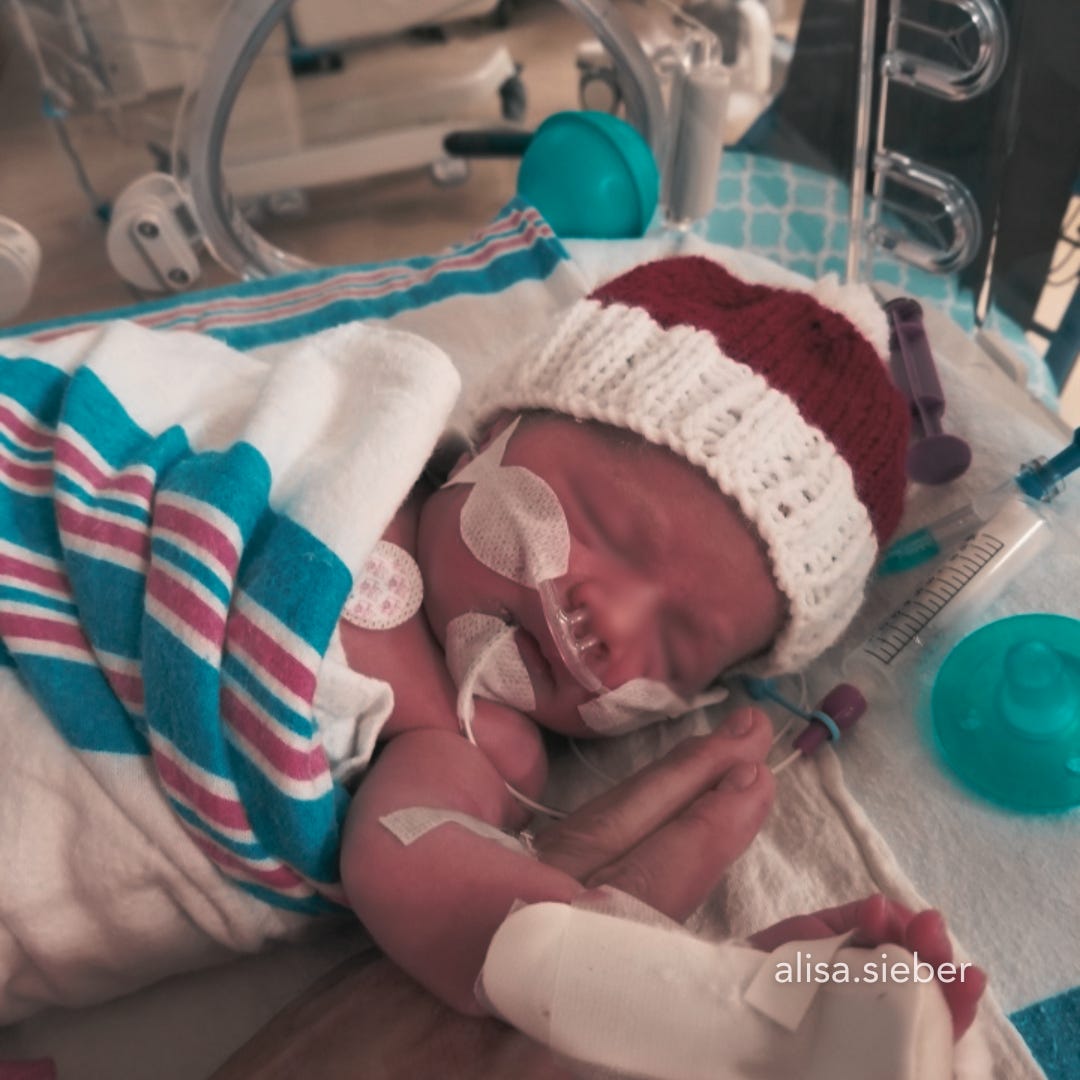
My mother survived. But not unscathed. Neither was I.
In 2019, I got out of the Marine Corps just before the holidays, tired of the failing morale coming from too many leaks in the ship and not enough resources to repair it. I had an airline job lined up, my husband was in a corporate position, and when Christmas rolled around, I tried to make Christmas look like a Hallmark card but felt like it’d been tossed in the fire. When challenges with my mother’s recovery and the economy left her unable to live independently, my mother and stepfather moved in with us. Because that’s what family does.
But I was one glass of wine too many from accusing her of ruining Christmas. Not this year, but all the ones that came before. I was one meltdown away over sibling gift counts before I’d be hiding in my bedroom closet, a place I’ve retreated to for as long as I could open door handles. With their father, I was slipping further away as my life unraveled, keeping my mouth shut to things I didn’t know how to explain. I just smiled and mailed a holiday card to every person I’d ever said hello to. But behind the photo was a woman screaming into her hands, finding another reason to hate this time of year.
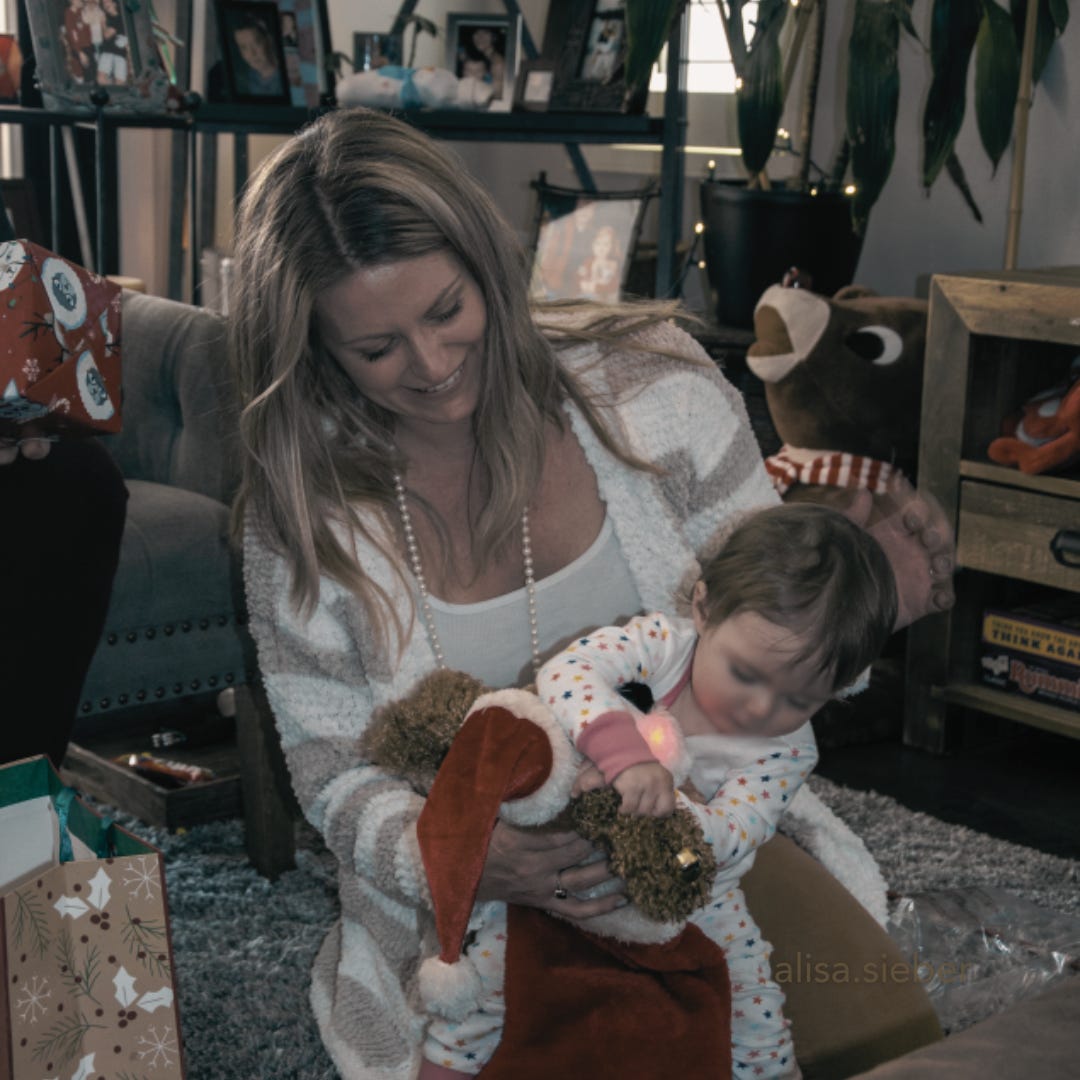
By the time the pandemic was in full lockdown, I was barely holding on. It was a year of loss, of unexpected deaths taken by illness while people in my neighborhood insisted it wasn’t real, and I felt myself unraveling quietly inside a life that still looked intact from the outside. I was carrying the aftermath of choices I didn’t know how to speak about, the kind that fracture you internally long before they ever threaten to surface, and every day required an exhausting performance of normalcy I no longer believed in. I didn’t know how to stay present in the life we had built, or how to leave it without detonating everything in the process, so I existed in a constant state of avoidance, half here and half somewhere else, rehearsing exits I was too afraid to take.
Every time the holidays came around, I felt younger instead of older, my children aging forward while I regressed, stuck in a version of myself that didn’t trust her own judgment or desires. I bit my tongue with my husband, swallowing words that felt dangerous the moment they formed, afraid that opening my mouth would unleash a reckoning I wasn’t ready to survive. There were secrets I didn’t yet have language for, loyalties I didn’t understand, and a growing sense that I had already crossed lines I couldn’t uncross, even as I continued to show up every day pretending I hadn’t.
By 2021, I was in full crisis mode, though from the outside it might have looked like we were just busy, just living, just trying to make the most of things. I was taking my kids skiing, just like my newly single dad had done with me, searching for ways to connect with them that felt safe, controlled, nostalgic, anything that didn’t require me to sit still long enough to feel what I was avoiding. My husband and I were hiring babysitters constantly, engineering escapes under the guise of self-care, surrounding ourselves with enablers and distractions and people who helped us keep moving, helped us believe that motion itself was healing. I was leading us on a kind of wild chase around the truth, piling experience on top of experience, convinced that if we stayed in motion, if we never slowed down enough to look directly at what was breaking underneath, we might outrun the reckoning altogether.
I was terrified of stillness. Terrified that if we stopped, even briefly, everything I had been holding together through speed and noise would collapse at once. So we kept going, chasing moments that felt like wholeness but always ended in the same quiet emptiness, running not because we didn’t know what we were running from, but because naming it would have required us to finally confront it.

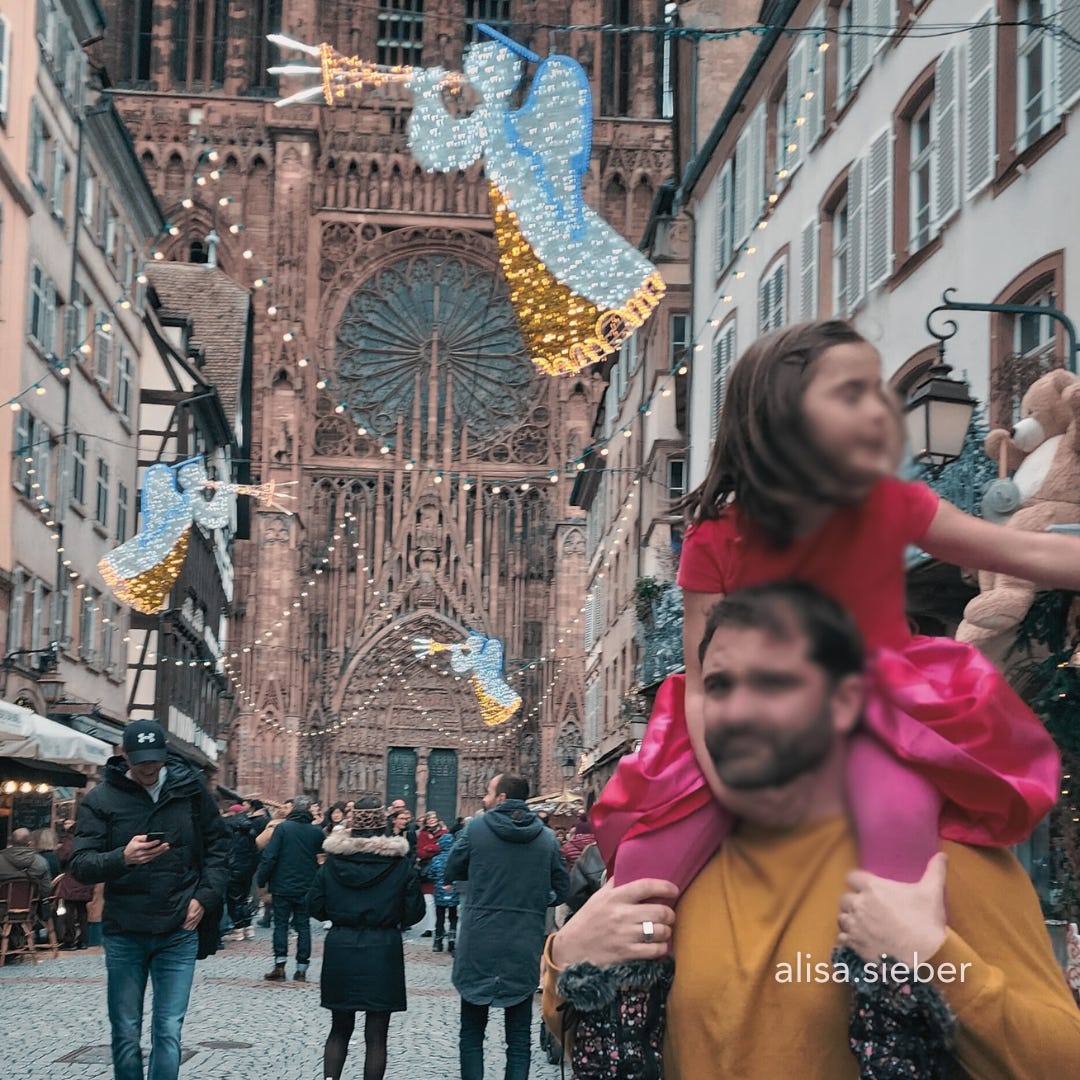
By the time we woke up in 2022, the truth had already been revealed, and the work of healing, messy and unfinished, had begun. I was trying to rebuild trust with my husband, renegotiate my relationship with my mother, and, for the first time, turn toward myself and the past versions of me I had spent years either running from or resenting. That Christmas, we brought the whole family, including my mother, to Strasbourg for chocolat chaud and a bit of Noël, following a story my father’s mother had once told me about doing the same thing when she was younger. “You have to see the Christmas markets,” she said, as she set out the entire collection of her Trim a Home Christmas village on the mantel, miniature worlds frozen in time.
In Strasbourg, we watched our daughters run carefree through the rain on cobblestone streets, their laughter echoing through a city built on centuries of endurance, while my husband and I quietly wrestled with the familiar urge to disappear. The impulse to flee was still there, sharp and seductive, and we talked openly about what it might mean to start over completely, to move to France, to leave everything behind so we wouldn’t have to keep facing what had already been exposed. But this time, the fantasy didn’t carry the same power. We could see it for what it was, not a solution but a reflex.
So we didn’t run. We came home. And we kept confronting, each other, our families, and the parts of ourselves that had learned to survive by leaving long before they ever learned how to stay.
By 2023, things were starting to make more sense, not because everything was better, but because we were finally able to see the full scope of what needed tending. It was no longer just my family or my past that required confronting and understanding, but my husband’s as well, and the ways our inherited patterns had been quietly colliding for years. That year, we were brought back to reality when his family was grieving the death of his grandparents, a loss that cracked open his own childhood and the unfinished work he had carried forward without realizing it. It marked the beginning of his real journey with his family and the generational trauma he would need to face, not alone, but alongside me.
At the center of it all were two parents trying to learn how to co-regulate in real time, aware that our daughters were watching more closely than we wanted to admit, already sensing when things weren’t okay even if they didn’t yet have language for it. It was the first time our children really spent meaningful time with their cousins, and the first year we stopped performing for the holidays altogether, choosing instead to set boundaries that prioritized emotional safety over tradition, not just for ourselves, but so our daughters wouldn’t have to grow up learning how to read the room the way we had.
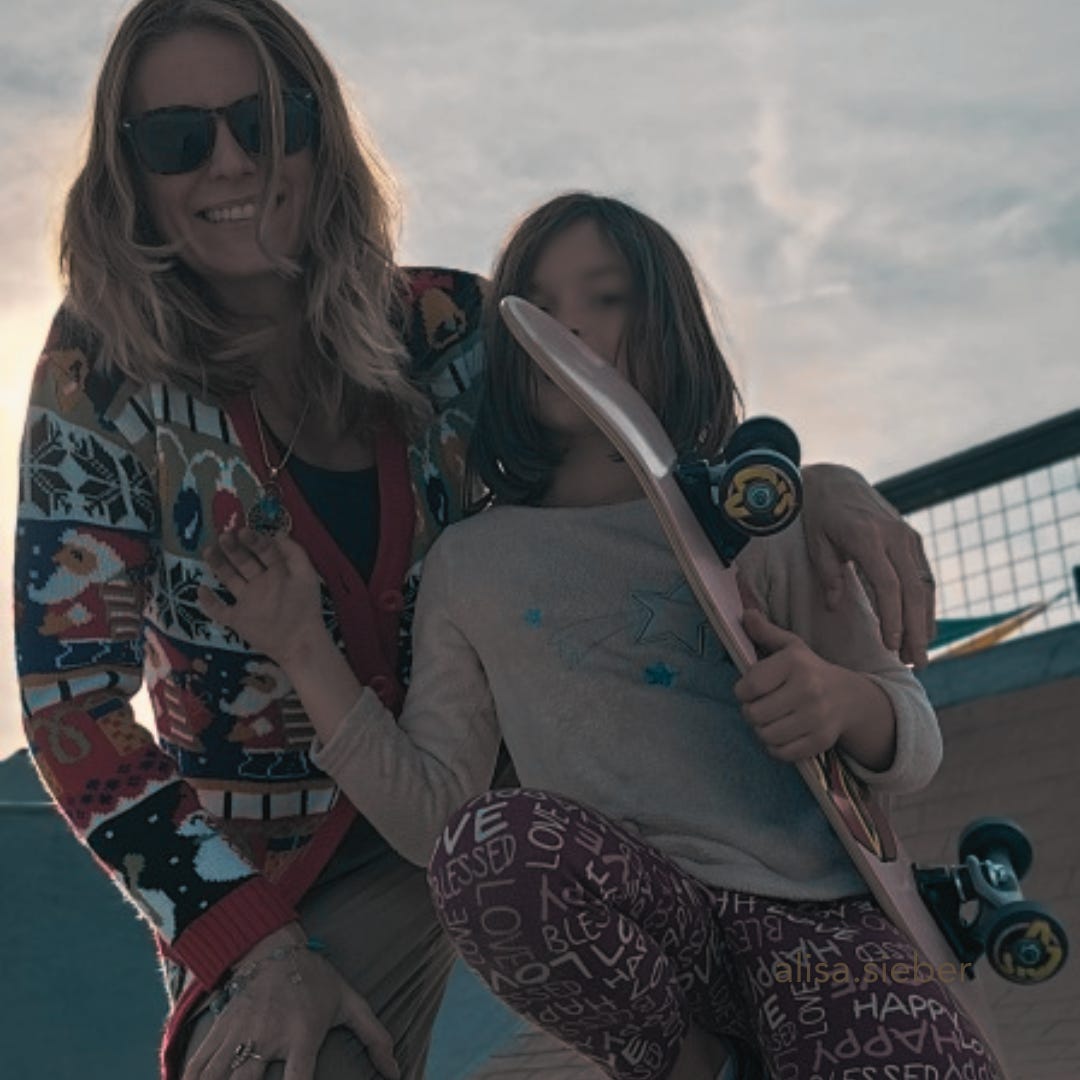
And by 2024, we finally made the change we’d been avoiding. We moved home.
We had woken up and realized this wasn’t the life we wanted. We weren’t sending honest Christmas cards. We didn’t believe in the magic. We’d grown into a version of us wrapped up in shiny paper and a bow, and when you opened us up, you’d find a mess of tissue paper and rocks tricking you into thinking something heavy was inside the box. We’d spent our twenties and thirties chasing the American Dream together, building careers as military aviators, public servants, and corporate leaders, and still felt like failures. Drifting, high-functioning adults who deep down craved a life with stillness and peace.
We’d been skirting the idea of leaving our suburban lives behind for some time, solving logistical details and making excuses for why now wasn’t the right time. We dreamed of land, of quiet, of privacy, but we weren’t ready to pull the trigger. But then both my husband’s parents were diagnosed with cancer. That woke us up to stop delaying.
We said fuck it. YOLO. We sold our five-bedroom new construction with a pool for a hundred-year-old farmhouse with one bathroom. We moved to a small town located equal distance from each of our hometowns, and in this, moved close to his parents for the first time since we had left. We left a new house that helped me heal scars older than its foundation for an old home that promised time was relative. My mother and stepfather came with us, settling into their own space on the property which would eventually evolve into Chez Serendip, our sanctuary in the redwoods.
We moved last year right before Christmas, spending it together, just the four of us, miserable and sick in our new (but old) house. All of us delirious with fever and hacking up a lung. Freezing in our old house with no central heat, the original pane windows wet with condensation, the fireplace smoking when the wood got wet in the rain. No internet due to a suspected cut wire, which we learned was really just a cord connected backwards. We slept on mattresses on the floor, waiting for our furniture to arrive, but hoping that all the versions of us we had outgrown wouldn’t come with it.
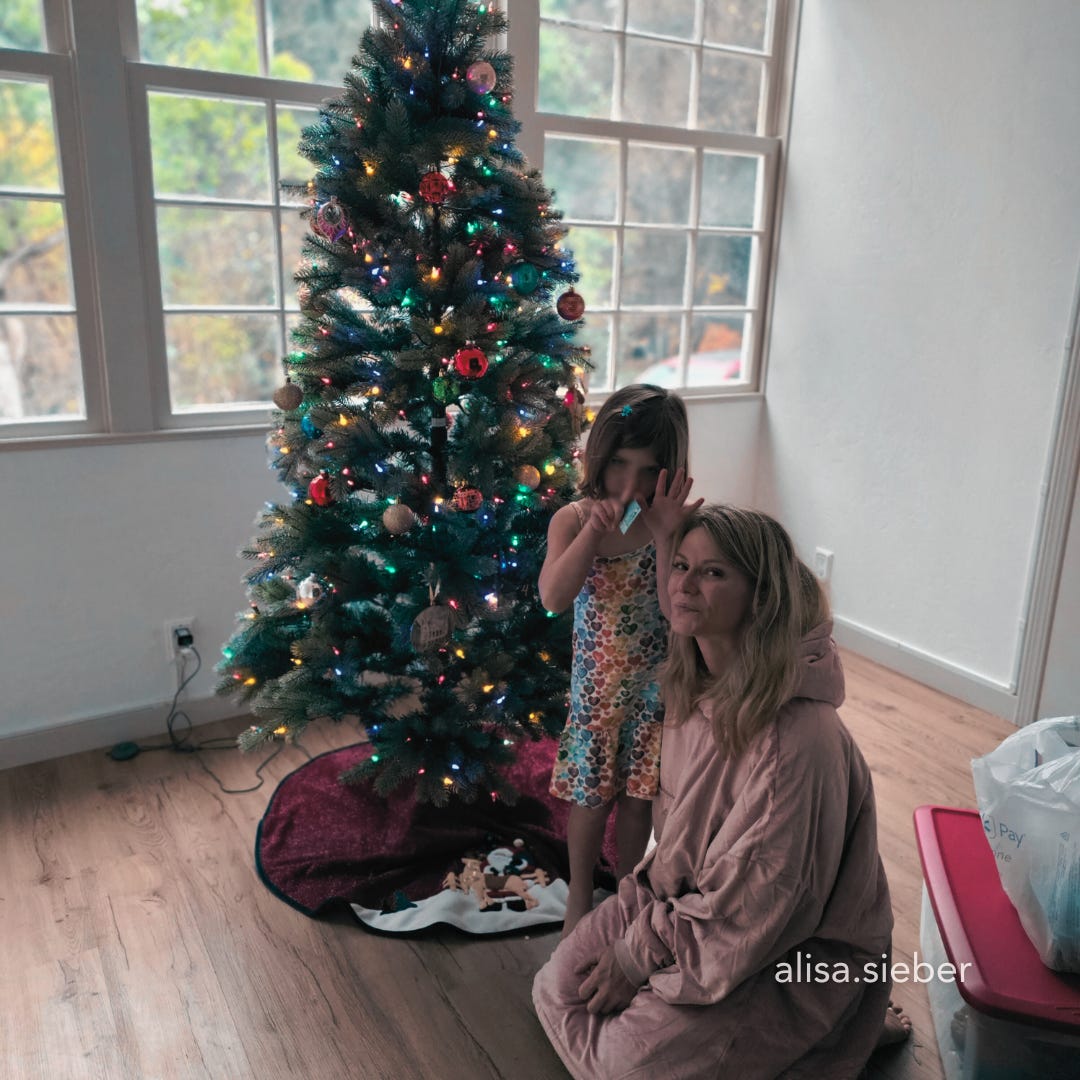
We had every intention of spending it with my husband’s parents. We’d just learned cancer is a cruel contender, and that our Christmases together with both of them were limited. But we couldn’t risk either of them getting sick. So we stayed home, opened unwrapped boxes, put up a small artificial tree that his mother left us on the porch to have some Christmas magic for the girls, and we all believed there would always be next year to make up for it.
But there wasn’t.
We moved home to build relationships that hadn’t existed but deserved to. Instead, we’d have to heal in the absence of the possibility of them.
That was Christmas 2024. We didn’t know yet that 2025 would bring a death in the family, the birth of a sanctuary, and one trip to Kentucky that would prove whether any of this work had mattered.
Continue the Story
I thought peace would feel like certainty. Like having answers, like knowing what comes next.
What I learned this Christmas: peace is the ability to stay. Even when grief, love, and uncertainty all exist at the same time.

Read What Came Before
These essays aren’t written in order. They’re written when the story demands it, when the memory surfaces, when something finally makes sense that didn’t before.
If you want to understand where this decade of performance began, where Christmas stopped being magic and started becoming something I tried to manufacture, start here:

About This Series
How the Fuck Did I Get Here? is a memoir-in-progress told through interconnected chapters. Each piece stands alone, but together they trace a journey from numbness to presence, from survival to integration, from choosing between two halves to learning to be whole.
This isn’t a story about healing being linear or easy. It’s about what happens when you finally stop running from yourself and ask the hard questions. When you sit with the uncomfortable answers. When you realize that breaking generational cycles means learning to hold both strength and softness at once.
This is the heroine’s journey told in real time: the messy middle, the ongoing practice, the moment-by-moment choice to stay present even when everything in you wants to run.
How to Read This Series
This is a choose-your-own-adventure memoir. Throughout each chapter, you’ll see key words and phrases underlined as hyperlinks. Click them to discover other stories exploring the same themes. Or browse the tags below to find what calls to you.
This interconnected web lets you:
Follow specific themes across the series
Discover related chapters organically
Navigate by what resonates with you
See patterns and connections emerge
Start anywhere. Follow the threads that call to you. Each chapter stands alone, but together they reveal the larger story.
Explore By Theme
This chapter touches:
The Origin
Christmas | The Origin Story | Disillusionment
The Inheritance
Generational Trauma | Motherhood Wound | Marriage as Protection
The Nervous System
Body Keeps the Score | Dissociation | Survival Instinct | Performing for Safety
The Collapse
Postpartum Depression | Cancer | The American Dream
The Transition
Giving Up the Facade | Returning Home | Marital Growth
Click any theme to explore related stories.
About the Author
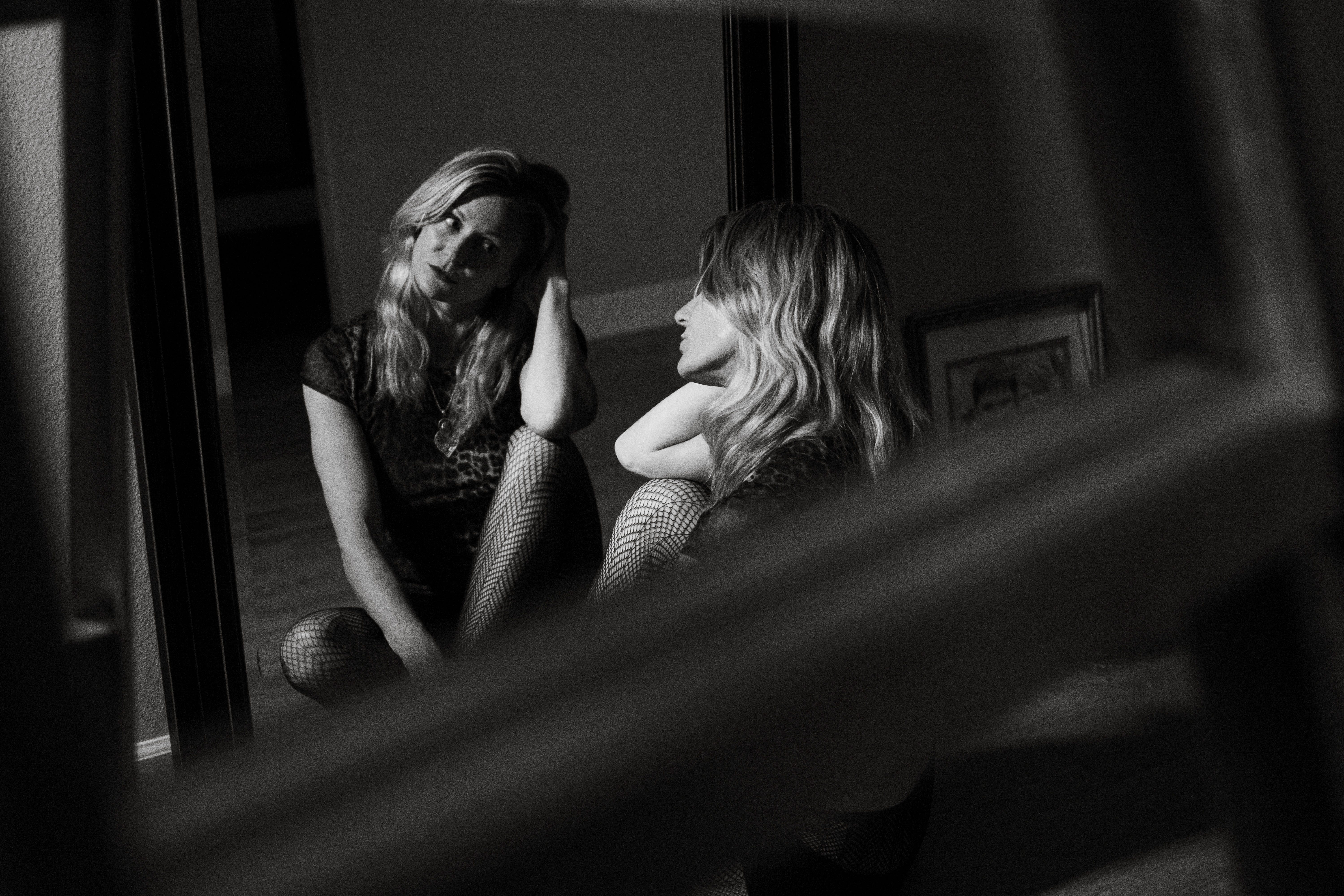
Alisa Sieber is a writer, former Marine Corps pilot, and mother exploring the intersections of healing, motherhood, and breaking generational cycles. Through raw, embodied storytelling, she examines what it takes to move from armor to integration, from choosing between strength and softness to learning to embody both.
She writes openly about complex trauma, postpartum depression, military identity, and the ongoing practice of staying present. Her therapy is her writing: public, accountable, and in real time.
She lives on a small farm in Northern California with her husband, two daughters, and too many animals. She’s building Chez Serendip, a cultural sanctuary and intentional community space centered on movement, creativity, and transformation.
Share How the Fuck Did I Get Here?
How the Fuck Did I Get Here? is a personal essay series exploring generational trauma, healing, and self-transformation. Through raw storytelling and deep introspection, it unearths the past to understand the present: reckoning with the cycles we inherit and the courage it takes to integrate what the world tells us to split.
If this piece resonated with you, share it with someone who needs to know they’re not alone.
Subscribe to How the Fuck Did I Get Here?
New chapters published weekly. Subscribe to follow this journey of breaking cycles, staying present, and learning what integration actually means: not perfection, but practice.
Free subscribers get:
Select chapters from the archives
Access to select new chapters for 2 weeks
Newsletter in your inbox
Comment access
Paid subscribers get:
Full archives
Access to all new chapters
Unlimited commenting to process alongside others
Gift subscriptions to share with people who need to see if this resonates
My gratitude for supporting this work
Connect with Alisa
Instagram: @alisa.sieber
Youtube: @alisa.sieber
Join the Conversation
Real talk: This shit is hard.
Breaking cycles. Staying present when it’s unbearable. Learning to hold anger and love simultaneously. Some days it works. Some days it doesn’t. Most days, somewhere in between.
If you’re doing this work too (asking the uncomfortable questions, sitting with what doesn’t resolve, practicing integration even when every instinct says run), join the subscriber chat. That’s where we process between posts, share what we’re learning, and stay present together.

And leave a comment below. Not to perform insight or prove you’ve healed. Just to be witnessed. To witness others. To let the messy middle be exactly what it is.
Healing isn’t linear. Let’s stop pretending it is.
You’re not alone in this. Your presence here reminds me I’m not either.